
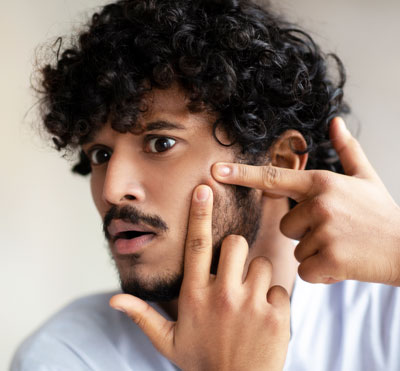
Understanding Acne
Acne develops when hair follicles are obstructed by sebum, keratin debris and bacteria. This obstruction causes inflammation, erythema, and a variety of different types of blemishes such as:-
- Whiteheads & Blackheads - Non-inflammatory clogged pores.
- Papules - Small, red, tender bumps caused by inflammation.
- Pustules - Pimples filled with pus, often surrounded by redness.
- Nodules & Cysts - Disease that has large, painful and deep-seated lesions that can be left untreated and scarred thereafter.
Causes of Acne
Several factors contribute to acne development such as:-
- Hormonal Changes - Hormonal changes during puberty, menstruation, pregnancy, or as a consequence of medical conditions such as PCOS can lead to acne.
- Excess Sebum Production - Excessive sebum secretion caused by hyperactive oil glands lead to an increased risk of plugged pores.
- Bacterial Growth - The cells of the bacteria Cutibacterium acnes proliferate in plugging pores and produce inflammation.
- Diet & Lifestyle - High glycemic foods, stress, and inadequate skincare routines can worsen acne.
Acne Treatment Options at Dermavision - The Skin Clinic
At Dermavision - The Skin Clinic, we provide comprehensive acne treatments designed to target the root causes and minimize scarring. Every treatment plan is tailor-made to give the best results for your skin.
Topical Medications
- Retinoids - Topical retinoids open pores, attenuate inflammation and stimulate cell turnover. They are effective for mild to moderate acne.
- Benzoyl Peroxide – It means that this antimicrobial agent decreases bacteria on the skin and prevents any appearance of new blemishes.
- Salicylic Acid - A beta-hydroxy acidic compound that removes the skin, unclogs the pores and refines the sebum (oily substance) skin.
Oral Medications
- Antibiotics - Oral antibiotics like Doxycycline or Minocycline are prescribed for moderate to severe acne to control bacterial infection and reduce inflammation.
- Hormonal Therapy - In the case of women with hormonal acne, hormonal medications (oral contraceptives, anti-androgens (e.g., spironolactone) can be used to normalize the hormone balance.
- Sotretinoin - A powerful oral medication used for severe, cystic acne. It reduces oil production, bacteria, and inflammation while promoting healing.
Chemical Peels
- Chemical peels, use a solution to exfoliate the uppermost part of the skin, close pores, and enhance acne scarring. Glycolic acid, salicylic acid and lactic acid are a few popular peels for acne.
Laser & Light Therapy
- Laser and light therapies eliminate acne-causing bacteria and reduce inflammation. Technologies like blue light therapy and fractional lasers are also capable of alleviating acne scars.
Microneedling
- Microneedling induces small micro-damage to the skin, recruits the production of collagen to that area and can be utilized in eradication of the acne scars.
Cortisone Injections
- For large, painful cysts, cortisone injections can reduce inflammation quickly, providing relief and minimizing the risk of scarring.
Extraction
- Professional acne extraction procedures eliminate blackheads, whiteheads, and non-inflammatory lesions without risk to the patient, thus preventing infection and scarring.
Skincare Products
- Medical-grade skincare made to your skin type can improve treatment results. According to our dermatologists cleansers, moisturizers, and sunscreens are appropriate for acne.
