
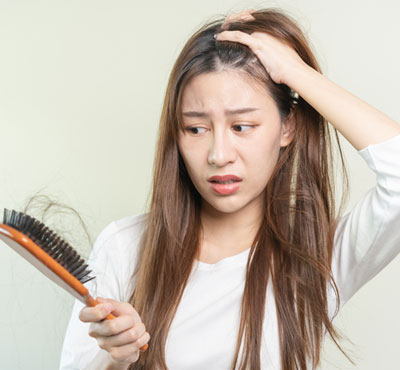
What is Hair Fall?
A hair loss is a complete loss of hair on the scalp or the body. While it is normal for approximately 50-100 hair strands to be lost per day in regular hair growth, noticeable or excessive hair loss may indicate the presence of an underlying mechanism to be considered.
Common Causes of Hair Fall
It is of key importance to identify the underlying cause of hair fall and treat it well. Here are some of the most common factors:-
- Genetic Predisposition - Hereditary hair loss i.e., androgenetic alopecia, is the widespread etiology of hair loss in both men and women. It usually takes the form of a receding hairline or bald spot.
- Hormonal Imbalances - Alopecia can be the result of hormonal fluctuations that occur during the time of pregnancy, menopause or hypothyroidism. Polycystic ovary syndrome (PCOS) is one of the other causes of excessive hair loss.
- Nutritional Deficiencies - Dysregulating anaemic parameters (iron, biotin, zinc, proteins) has an impact of resulting alteration and making the hair follicles weak, leading to hair loss.
- Stress and Lifestyle Factors - Psychosocial stress, suboptimal sleep quality and unhealthy lifestyle may influence the hair growth phase and lead to temporary or permanent hair loss.
- Medical Conditions - Subtypes (e.g., alopecia areata, scalp purulent infection, autoimmune diseases) have a direct impact on the scalp condition.
- Medications and Treatments - Hair loss may be one of the side effects of drugs to treat chemotherapy, hypertension and depression.
Environmental Damage
Irregular excessive exposure to pollutants and toxic or ultraviolet radiation can damage hair shafts, and cause alopecia.
Types of Hair Fall
Hair loss can be categorized into different forms according to the cause and the pattern:-
- Telogen Effluvium - It is a transient state where, due to an early and massive activation of a high number of follicles to the quiescent stage, a substantial amount of secretion is observed.
- Alopecia Areata - Disorder in which the immune system targets the hair follicle resulting in alopecia areata (AA).
- Traction Alopecia - Hair loss occurring due to continuous strain on the hair from tight hairstyles or extensions.
- Scarring Alopecia - Scalp inflammation and scarring-related hair loss, as well as permanent hair follicle damage.
- Anagen Effluvium - Transient alopecia caused by therapy that targets cessation (e.g., chemotherapy).
Diagnosing Hair Fall at Dermavision - The Skin Clinic
At Dermavision - The Skin Clinic, hair loss diagnosis is done with an integrated approach. Our hair specialists conduct a thorough evaluation that includes:-
- Detailed Medical History - Understanding your health background and lifestyle habits.
- Scalp Examination - Assessing the condition of the scalp and hair follicles.
- Blood Tests - Identifying nutritional deficiencies, hormonal imbalances, or underlying medical conditions.
- Trichoscopy - Advances in imaging technology enable the re-enlargement and examination of the scalp and hair structure.
