
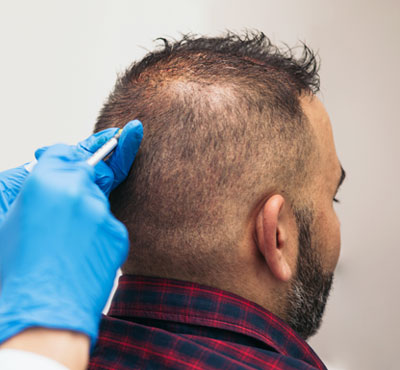
How PRP Treatment Works
In PRP therapy, a small quantity of the patient's blood is drawn, processed to concentrate the platelets, and then injected into the desired area, as the platelets have crucial growth factors and proteins, which stimulate the production of collagen, promote tissue repair, and enhance the health of hair follicles in the individuals, who might be looking for better solution. This procedure is employed in three steps as follows:-
- Blood Collection - A small amount of blood is drawn from the patient, almost like a routine blood test.
- Centrifugation – The blood sample is placed in the centrifuge machine so that it can separate platelet-rich plasma from other blood components.
- Application of PRP – The concentrated PRP is then injected into the skin or scalp using micro-needles or direct injections.
Benefits of PRP Treatment
PRP treatment is generally recognized for many benefits, which are as follows:-
- Promotes Hair Growth - It stimulates dormant hair follicles, increasing hair density and thickness.
- Enhances Skin Renewal - PRP increases collagen synthesis, minimizing wrinkles and leaving the skin more radiant.
- Enhances Healing - It is able to enhance the body's normal healing mechanism. It can thus be applied during post-surgical and injury healing.
- Minimally Invasive - It has no need for incisions; hence it minimizes recovery time as opposed to surgical interventions.
- Natural & Non-Toxic - Since it comes from the patient's blood, allergic reactions or other adverse effects are virtually negligible.
PRP for Hair Loss
For both men and women, hair loss is an increasing problem. PRP therapy is a promising treatment for androgenic alopecia (pattern baldness), thinning hair, and hair loss due to medical conditions or stress because it stimulates the natural growth of hair and revitalises hair follicles. For best outcomes, PRP therapy can be administered either by itself or in combination with other hair restoration procedures such topical medicines and hair transplants.
PRP for Skin Rejuvenation
PRP treatment is widely used in aesthetic dermatology for skin rejuvenation, and its improved aspects of the skin include color, texture, and overall appearance, treating the following problems:-
- Fine lines and wrinkles
- Acne scars and stretch marks
- Hyperpigmentation and sun damage
- Dark circles under the eyes
The growth factors in PRP induce collagen and elastin production, hence firmer and more youthful skin.
PRP for Joint & Muscle Injuries
Beyond aesthetics, PRP has substantial applications in sports medicine and orthopedics in accelerating the healing of injured muscles, tendons, and joints. Its regenerative property reduces inflammation, increases the regeneration of tissue, and makes PRP desirable for athletes and patients with chronic joint pain.
Who is a good candidate for PRP therapy?
It is suitable for people who have mild to moderate hair loss, skin aging, or slow-healing injuries. However, it may not be suitable for people with the following conditions:-
- Blood disorders or clotting conditions
- Chronic skin infections
- Severe hair loss with completely inactive follicles
Consultation with a qualified dermatologist or aesthetic specialist is required to determine suitability for the treatment.
