
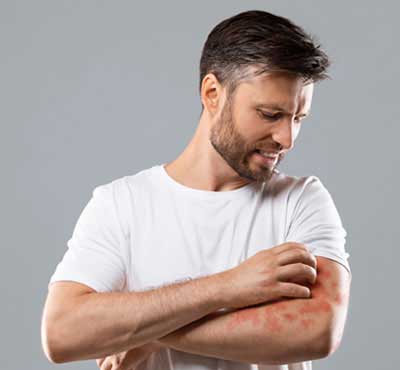
What Causes Skin Allergies?
Allergic cutaneous reactions include those brought on by contact with the skin or integumentary system as well as transcutaneous intrathoracic intrusions from substance ingestion, inhalation, or injection. Typical transgressions include:-
- Environmental Allergens - Pollen, dust mites, mould spores, and pet dander.
- Food Allergies - Dairy, nuts, shellfish, and other common food triggers.
- Chemical Allergens - Ingredients in soaps, cosmetics, detergents, or perfumes.
- Medications - Certain antibiotics, aspirin, or topical medications.
- Natural Substances - Plants like poison ivy or latex from rubber products.
Exposure to these allergens leads to the body's immune system releasing histamines and other mediators that cause skin inflammation, erythema and pruritus.
Recognizing the Symptoms
Skin hypersensitivity can be expressed in several forms or by potential causes and associated specific sensitivities. The most common symptoms include:-
- Rashes - Red, inflamed patches on the skin.
- Itching - Persistent or intense itching that may lead to scratching.
- Hives - Itching, pruritic, erythematous, polymorphic raised wheals of variable size and manifestation.
- Swelling - Particularly around the eyes, lips, or affected areas.
- Blisters - Fluid-filled bumps that may ooze or crust over.
- Dryness - Flaky, cracked skin, especially in chronic conditions like eczema.
Patients with such symptoms, after exposure to the known allergen, should be referred to a dermatologist or special committee for dermatology unit in skin clinics for correct diagnosis and reasonable treatment.
Types of Skin Allergies
Selecting a treatment based on the diagnosis of the particular cutaneous hypersensitivity gives rise to a treatment. Here are some common forms:-
- Contact Dermatitis - Contact with an allergen or irritant causes erythema, swelling and pruritus.
- Atopic Dermatitis (Eczema) - Dry, itchy and inflamed skin and the underlying disease.
- Urticaria (Hives) - Allergic skin findings (eg, pruritus, erythematous/ raised/ welts from foods, medications, insect stings).
- Angioedema - Swelling beneath the skin, often accompanying hives.
- Allergic Reaction to Insect Bites - Swelling, redness, and itching following a bite or sting.
- Photodermatitis - Skin reactions triggered by sunlight combined with certain substances.
Diagnosing Skin Allergies
Proper diagnosis is crucial for managing skin allergies effectively. A visit to a professional skin clinic often involves:-
- Medical History - Reviewing symptoms, lifestyle, and any potential triggers.
- Physical Examination to identify the pattern and type of skin reaction.
- Patch testing - Sensitivity-based learning with minute amounts of potentially eaten food allergens to receptive skin, which will allow the individual to memorize specific allergens.
- Blood Tests - Measuring allergen-specific antibodies (IgE) in the bloodstream.
- Skin Prick Test - Introducing allergens into the skin to observe reactions.
Accurate and early diagnosis at the beginning of the course leads to an appropriate delivery of the treatment plan based on the root cause of the allergy.
